The tank is described
Wes asks for gallons, how many people are in the house, and whether the lid is exposed.
Pump ticket · residential
Three quarters of 1,000 gallons is 750. At about 50 gallons of solids per person each year, three people use that in five years. Wes writes down the gallons, whether the lid is exposed, and if the yard over the field is already wet.

Dispatch slip
Talk to Wes
Wes takes gallons, household size, and whether the yard is wet.
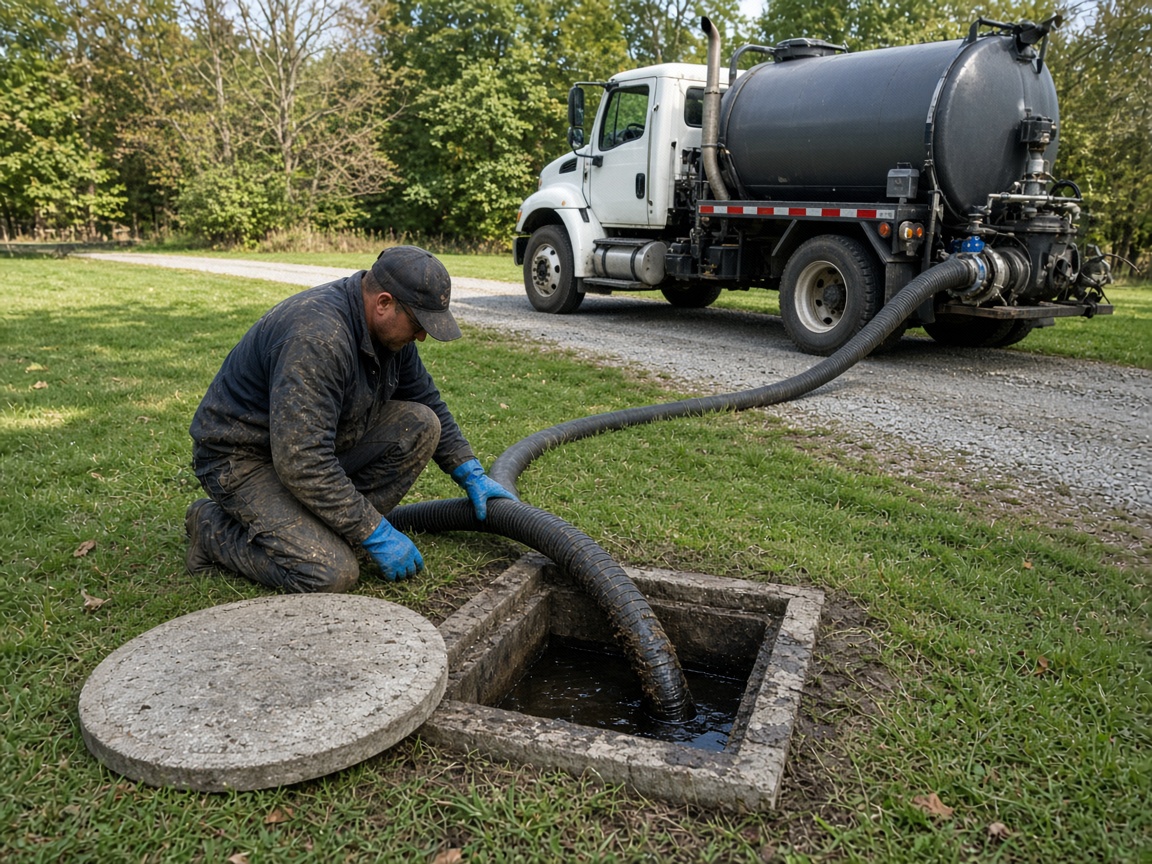
The desk, not the truck
His portrait is the person on the phone, not the man at the lid. He records size, access, and whether this is a backup. Those notes are what the company sees before they call the customer back.
Dispatch slip
Talk to Wes
Wes takes gallons, household size, and whether the yard is wet.
The caller names the tank and the lid. Wes keeps the household size and whether the field is wet. One company inside the radius calls back to run the hose. The film is the product. The pump-out is the local truck.
| Gallons | Tank size A 1,000-gallon tank is the planning default only when the caller says so. |
|---|---|
| People | Who is in the house Three residents and a holiday full of guests are different solids loads. |
| Lid | Buried or at grade A lid under the sod is a shovel before it is a hose. |
| Field | Wet yard or dry Spongy grass over the laterals is not a routine five-year visit. |
| Urgency | Backup or calendar Sewage at the lid is a truck now. A quiet tank can wait for the interval. |
Usable volume divided by solids per person. A backup, a wet lid, or a spongy field means book a truck now.
Wes asks for gallons, how many people are in the house, and whether the lid is exposed.
The pump interval divides usable volume by solids per person. A wet field ignores that date.
The request goes to one paid pumper inside the radius. It is not sent to every truck.
The caller hears a local company will call them back. That company pumps the tank. Wes does not.
A quiet 1,000-gallon tank on a five-year clock is a different day than sewage at the lid.
Book DemoDispatch slip
Talk to Wes
Wes takes gallons, household size, and whether the yard is wet.
If you pump septic tanks, Lite is $99 per month, 1 seat. The plan includes your phones. Local septic requests start after the plan is paid. You can pass any request. The street address shows after you claim it.
No. Wes books the call and writes down gallons, household size, and whether the lid is open. A local septic company pumps the tank.
Whether sewage is at the lid or in the house, the tank size if known, how many people are there, and if the concrete lid is exposed.
It uses three quarters of the tank volume and about 50 gallons of solids per person per year. A 1,000-gallon tank with three people is about five years. A wet field means a truck now.
No. Lite is $99 per month for one seat and includes the company’s own phones. The pump-out is priced by the local company after they call the customer back.
Yes. A company can pass any request. If they pass, or the window expires, the next nearest paid company is offered the same job.
After the company claims the request. Before the claim, the offer shows the city and the job notes, not the street.
The locations list covers about 1,000 US cities. A request is offered only where a paid company covers that radius.